
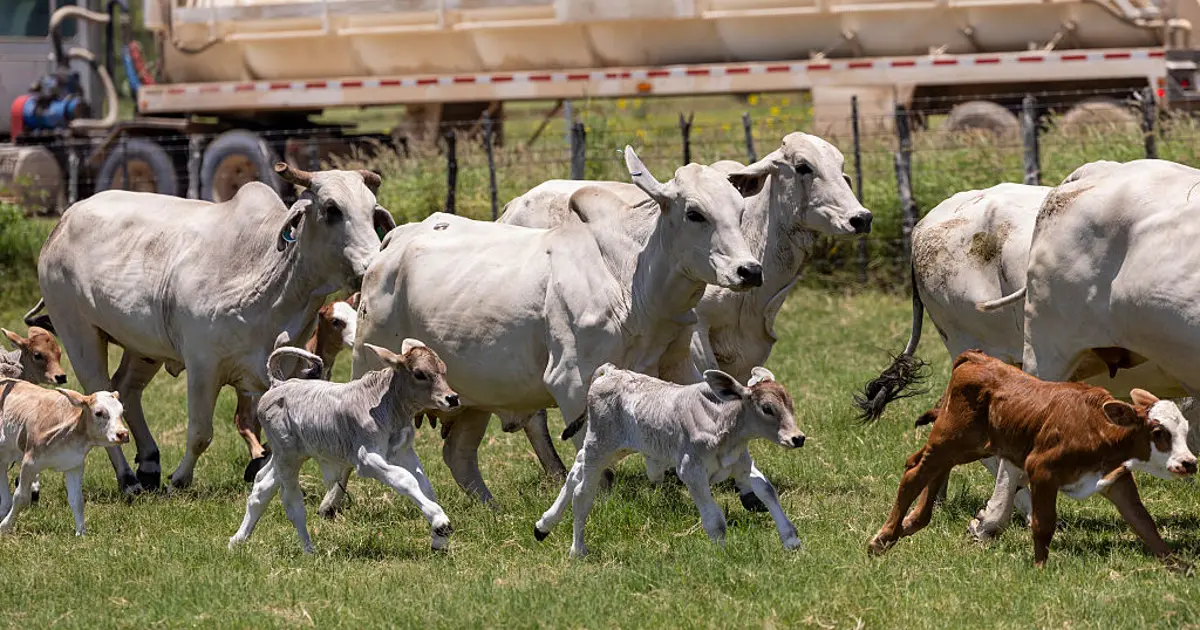
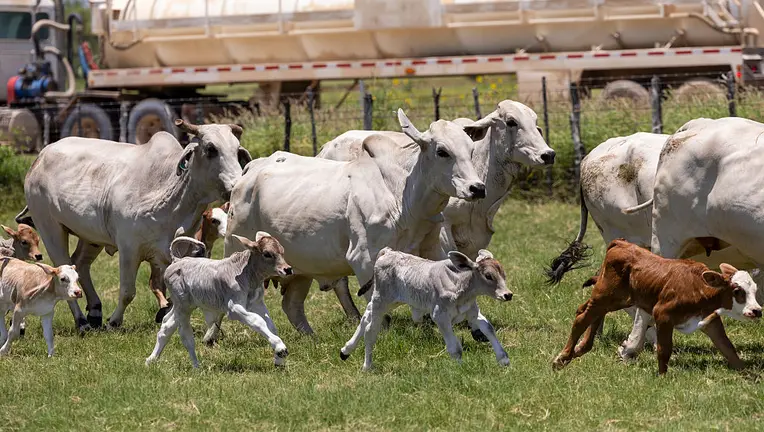
FRIO COUNTY, TEXAS – JUNE 17: Cattle are seen at Lew Thompson’s ranch on Wednesday, June 17, 2026, in Frio County. (Andrew J. Whitaker/San Antonio Express-News via Getty Images)
Read more Houston weather forecast for Thursday: Summer heat, Saharan dust
Federal and state officials have confirmed that the number of New World screwworm cases in the United States has risen to 20, with all but one located in Texas.
New World Screwworm Update
What we know:
- Latest Detection: On June 23, 2026, the parasite was detected in a bovine in Medina County, prompting immediate state action.
- Case Breakdown: There are now 19 total confirmed cases of the destructive, flesh-eating parasite in Texas and one in Lea County, New Mexico. All confirmed U.S. cases have affected domestic animals rather than wildlife.
- Emergency Activation: Governor Greg Abbott has activated the Texas State Emergency Operations Center, and strict animal movement quarantines remain in effect across vulnerable ranching counties.
- Public Risk: While the screwworm larvae feed on living tissue and pose an immediate, severe threat to livestock and regional agriculture, health officials emphasize that the direct risk to the public remains low.
Timeline:
The current U.S. outbreak began on June 3, 2026, when the first case was reported in a 3-week-old calf in Zavala County. Since then, the parasite has steadily surfaced in multiple counties across West and South Texas.
Prior to the Medina County detection, three domestic cases were identified on June 23 in cattle located in Terrell County, following a case confirmed in a Terrell County goat on June 22. State agricultural officials note that these concentrated detections represent significant focal points for containment.
For international context, agricultural officials note that Mexico has battled a massive resurgence of the pest, reporting more than 29,000 cases since November 2024, with roughly 1,800 currently active cases. The Texas Parks and Wildlife Department and the Texas Animal Health Commission (TAHC) are updating situation reports daily as new inspections occur.
Strict Quarantine Zones Expanded
To curb the spread of the parasitic fly, the TAHC has established localized quarantine boundaries known as infested zones. Following the most recent detection in Medina County, TAHC Executive Director Dr. Lewis R. Dinges signed a new executive order on June 24, 2026, officially declaring “Infested Zone 09.”
This latest order imposes strict movement restrictions across designated parts of Bandera, Medina, and Uvalde counties. Quarantines and movement restrictions are now actively enforced in parts of the following Texas counties:
- Bandera
- Edwards
- Gillespie
- Kerr
- Kimble
- La Salle
- Medina
- Pecos
- Sutton
- Uvalde
- Val Verde
- Webb
- Zavala
Under explicit orders signed by Dr. Dinges, all warm-blooded animals inside a designated infested zone cannot be moved outside the zone without prior authorization. Furthermore, hides, carcasses, and animal parts capable of serving as a host for the screwworm are also barred from leaving quarantine zones until they are inspected, treated, and cleared by a commission representative. Unauthorized movement is subject to administrative penalties and criminal prosecution.
Ranchers and livestock owners moving warm-blooded animals out of these zones must contact state officials to schedule a physical inspection. An animal health official must issue an official movement certificate or permit documenting the specific preventative treatments used and the animals’ official identification tags.
Scaling Up the Emergency Response
The state’s aggressive posture follows months of regulatory preparation. Governor Greg Abbott initially issued a statewide disaster proclamation regarding the screwworm threat on January 29, 2026, renewing it monthly before issuing an updated statewide disaster proclamation on June 5, 2026, following the first physical detection in a calf. The activation of the Texas State Emergency Operations Center allows state agencies to rapidly deploy resources to aid the agricultural sector.
The New World screwworm is a livestock pest that the United States successfully eradicated decades ago through aggressive intervention.
What they’re saying:
“These developments obviously represent a serious threat to our livestock and wildlife, but they haven’t caught us off guard.” — Brooke Rollins, Secretary of Agriculture
Read more Traffic alert: US-59 lanes at Bellaire closed after truck fire, hazmat spill
The parasitic fly targets open wounds—including minor cuts, tick bites, or branding and castration sites—to lay its eggs. The resulting larvae burrow into and feed on the living tissue of the host animal, causing a painful condition known as myiasis. If left untreated, the infestation routinely causes severe secondary infections and is fatal to livestock.
“The screwworm fly is a little bit larger than a standard housefly, has red eyes and a green back,” explained Jeremy Hull with Travis County Parks. “But the biggest thing to note is that the screwworm infects living tissue, whereas houseflies and other common maggots are usually found in dead or dying tissue.”
Screwworm Risk and Household Pets
While state animal health officials race to contain the New World screwworm, federal officials confirmed the first case of the parasite in a dog. FOX 7 Austin’s Alec Nolan has more on what pet owners might want to be aware of.
The Sterile Fly Strategy
In response to the spreading geography of the cases, the USDA has launched aggressive sterile fly dispersal flights over affected regions, including Crockett and Terrell counties.
The rapid response teams caution that additional cases are likely to appear in the coming days even as millions of sterile flies are released each week. The sterile insect technique prevents future generations from reproducing but does not kill existing larvae already incubating in animals. Because the fly has a life cycle of roughly 21 days, officials project it will take multiple reproductive cycles before local populations begin to collapse.
“It’s important that we track the spread of this. The sooner that we all deal with it, the sooner we’ll get this behind us,” said Hoppy Haden of Caldwell County.
What is New World Screwworm?
The New World screwworm fly (Cochliomyia hominivorax) is a metallic blue blowfly with three dark stripes on its back and distinctive orange eyes.
Livestock owners, pet owners, and veterinarians are urged to inspect animals daily for non-healing or foul-smelling wounds. Suspected livestock cases must be reported immediately to the Texas Animal Health Commission at 512-719-0700.
Public Health Guidance
While there have been no reports of locally acquired human infestations in the United States during this outbreak, the Texas Department of State Health Services (DSHS) oversees public monitoring. Individuals with high outdoor exposure or those working closely with livestock face a slightly higher risk if they have unmanaged open wounds.
- The DSHS recommends the following basic precautions for residents in active agricultural zones:
- Keep all open cuts, scrapes, or wounds thoroughly cleaned and covered.
- Ensure window and door screens on homes and structures are in good repair.
- Wear loose-fitting, long-sleeved clothing when working outdoors to prevent skin breaks.
- Utilize EPA-registered insect repellents when clearing brush or handling livestock.
Anyone who observes or suspects larvae development within a wound should not attempt self-treatment and should contact a healthcare provider immediately.
Read more Husband dead after hit-and-run in north Harris County, driver at large