
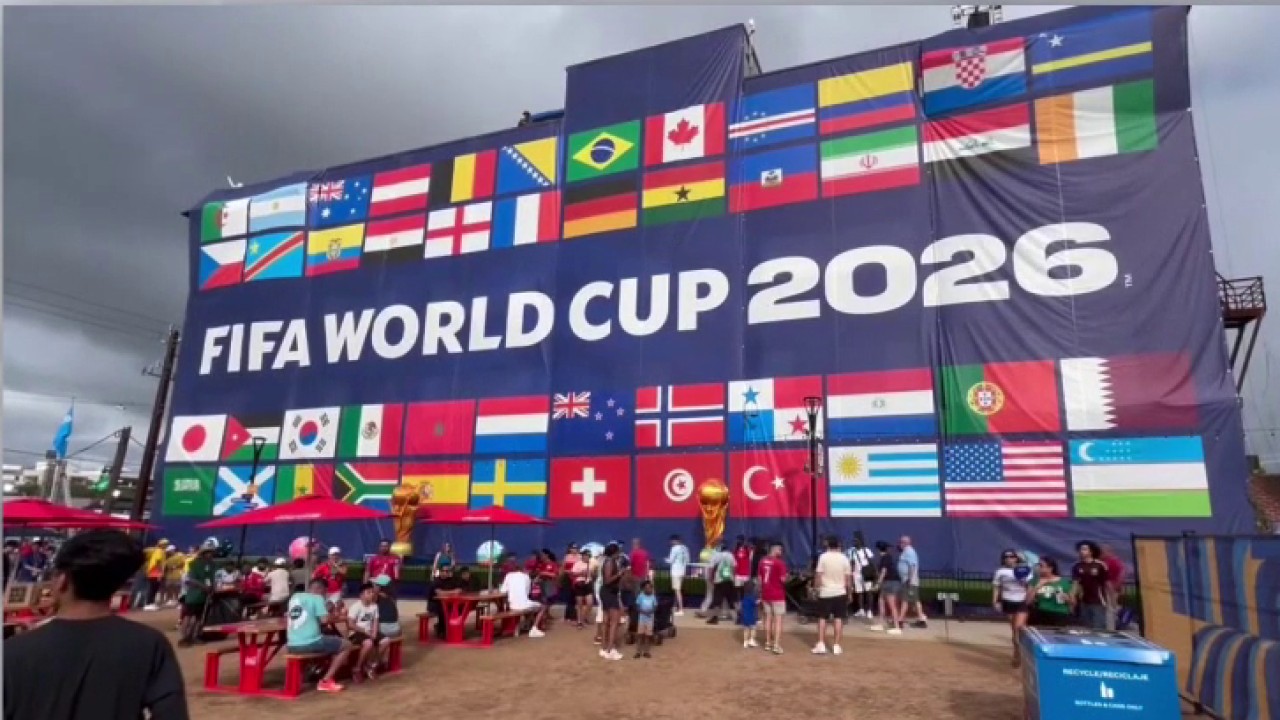
HOUSTON – City and host committee leaders declared Houston’s role in the 2026 FIFA World Cup an overwhelming success Wednesday, revealing that more than 1.1 million people participated in tournament events across the city over the six-week event.
Read more Mathew Knowles brings the story of Destiny’s Child to Houston
2026 FIFA World Cup: Success for Houston
Big picture view:
Speaking at a post-tournament recap press conference, officials highlighted strong attendance, flawless public safety operations, and major economic investments that will benefit the region long after the final whistle.
Houston Stadium hosted seven matches during the tournament, leading all 16 host cities across North America with 27 total goals scored.
“The FIFA World Cup 2026 was the greatest sporting event ever staged, period,” said Chris Canetti, president of the FIFA World Cup 2026 Houston Host Committee. “Houston welcomed and embraced the FIFA World Cup since day one with scale, energy, and diversity. You did not simply host the world’s game — you launched it to new heights.”
A Global Audience and a Cultural Connection
By the numbers:
According to ticket data released by the host committee, 500,000 out-of-town visitors traveled to Houston for the tournament.
Ticket buyers hailed from all 50 states and more than 200 countries, with 81% of buyers coming from outside the Houston area and 44% representing international markets.
Houston Mayor John Whitmire praised the city’s diverse population for creating a unique, welcoming environment for international teams and visiting fans.
“Let me publicly admit, I am now a soccer fan,” Whitmire said. “It’s contagious, not only because of the speed, but also the joy it brings to others. Every visiting team said their experience was being the home team in Houston, Texas, because of our immigrant community. That is really something to be proud of.”
Whitmire also brushed off pre-tournament concerns about severe traffic congestion across the city.
“It’s unfortunate that some folks were saying, ‘Well, it’s gonna really make the trip to work difficult.’ I had to remind some of our friends, ‘No, the games are at noon!’” Whitmire joked. “I can honestly tell you I’ve never heard a complaint from Houstonians about the FIFA in Houston experience.”
Record Turnout and Lasting Infrastructure in EaDo
Why you should care:
The East Downtown (EaDo) district served as a central hub for fan celebrations, drawing over 1 million visits to the official FIFA Fan Festival footprint on Dallas Street, including more than 500,000 turnstile entries into the main venue.
Canetti noted that FIFA and visiting fans widely considered Houston’s Fan Fest to be the top-rated fan zone among all 16 host cities. Whitmire added that the city is already exploring options to preserve parts of the EaDo site as a permanent community soccer field and outdoor music venue.
Read more Houston crash: Vehicle falls from HOV lane onto Southwest Freeway, roadway closed
Harris County Precinct 1 Commissioner Rodney Ellis emphasized that the true measure of hosting a global tournament is the infrastructure left behind in local neighborhoods.
“The biggest sporting event in the world is a big deal, but what really makes it big is not who won or who lost,” Ellis said. “It’s really the investments that are here after FIFA has left. Beyond the matches themselves, World Cup-related investments were designed to leave long-term benefits in our region.”
Over 200 local organizations invested roughly $500 million in pre-tournament upgrades. Public projects included 400 lane-miles of resurfaced streets, $100 million in localized drainage improvements, $84 million in new sidewalks, 5,000 transit bus stop upgrades, and 7,000 newly planted trees.
Setting the Safety and Transit Standard
Dig deeper:
Despite 39 consecutive days of extreme summer heat and severe weather, public safety officials reported zero major security or crime incidents throughout the tournament window.
Out of more than 1 million attendees citywide, fewer than 70 heat-related emergency room transports occurred. FIFA published a 43-page formal report praising Houston’s heat response and cooling infrastructure as a case study for future global host cities to replicate.
Transit systems also handled record-breaking volume. The Metropolitan Transit Authority of Harris County (METRO) recorded 5.5 million total rides during the World Cup window, with METRO Rail seeing a nearly 50% surge over typical daily ridership. Meanwhile, Houston Airports processed 4.5 million travelers without operational disruptions.
Looking Ahead to 2031
What’s next:
With World Cup operations winding down, officials are already pivoting toward future international sporting events.
Through the local Impact Houston 26 legacy program, the city is delivering 23 new or refurbished youth soccer pitches, $1.5 million in collective investments across local youth clubs, and 1,200 club soccer scholarships for kids in underserved communities.
Ryan Walsh, Chief Executive Officer of the Harris County-Houston Sports Authority, confirmed the city is actively pursuing bids for the 2031 FIFA Women’s World Cup and the 2031 Men’s Rugby World Cup.
“Since 2004, Houston has hosted more major sporting events than any other city in North America,” Walsh said. “Thousands of visitors were wrapped in their nation’s flag, and Houston wrapped its arms around them. The tournament may be over, but our story is still being written.”
Whitmire expressed equal confidence in Houston’s position for future bids.
“We’re ready,” Whitmire said. “I’d be shocked if we’re not given the opportunity to host.”