
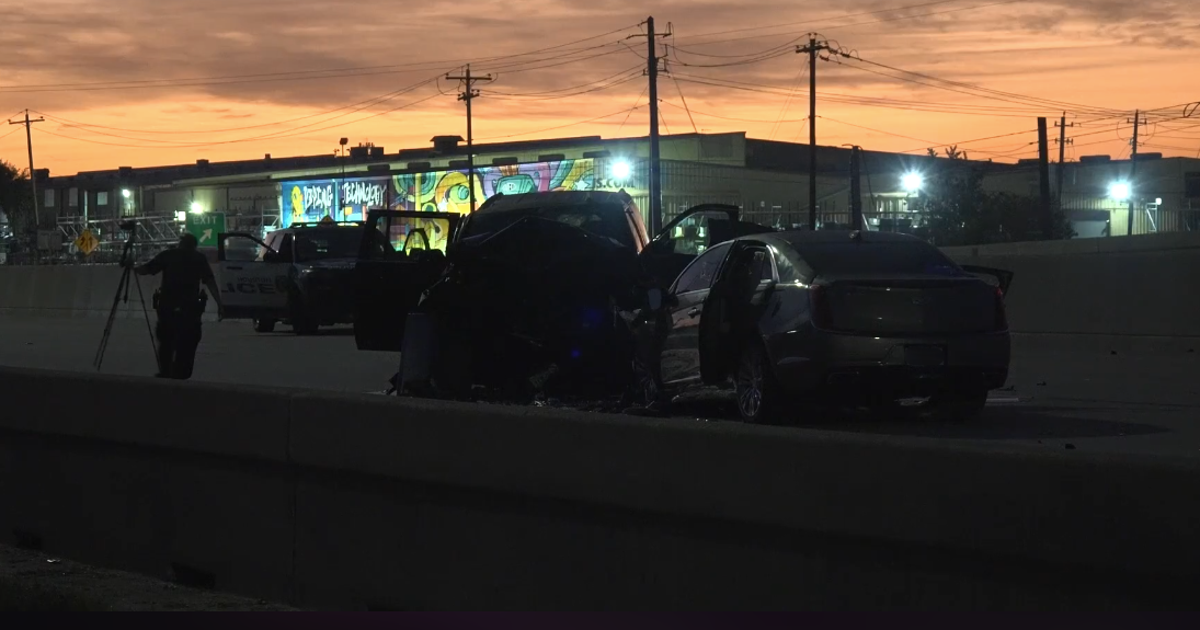
HOUSTON – Two deadly wrong-way crashes on Houston-area freeways Sunday are drawing attention to how agencies identify drivers heading into oncoming traffic, coordinate a response and investigate collisions.
Read more New 24/7 monitoring going into effect for Harris County suspects on ankle monitors
In interviews with FOX 26, Texas Department of Transportation spokesperson Danny Perez and Montgomery County District Attorney Mike Holley described the work that happens before and after a collision—from detection alerts and camera tracking to crash reconstruction and collecting evidence of possible impairment.
Weekend wrong-way crashes
What we know:
Conroe police received a call around 4:40 a.m. Sunday, Oct. 25, about a pickup traveling south in the northbound lanes of I-45 near Gladstell Street. Minutes later, additional callers reported a collision.
Officers found the crash near the Highway 105 exit. Police said the pickup struck an SUV head-on, killing its driver, 59-year-old Emelia Muniz. The 20-year-old pickup driver was hospitalized and was expected to recover.
Featured

Woman killed in wrong-way crash on I-45 in Conroe
Investigators believe a truck was going south in the northbound I-45 lanes and crashed head-on into the victim’s vehicle.
Another wrong-way collision occurred shortly before 5 a.m. on the 610 South Loop near Tierwester Street, east of Highway 288.
Houston police said the wrong-way driver struck a Chevrolet Suburban. The wrong-way driver died, and the Suburban’s driver was hospitalized in critical condition, according to FOX 26’s initial report.
Featured
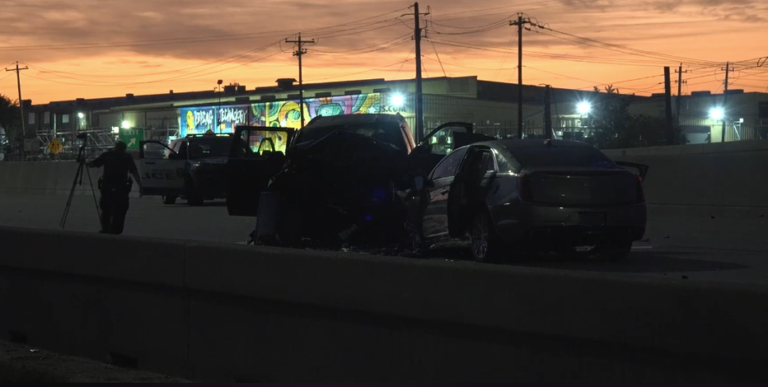

South Loop crash kills wrong-way driver, injures another
Police say a driver was going the wrong way on 610 and crashed head-on into a Chevrolet Suburban.
What we don’t know:
Conroe police said they were investigating whether intoxication contributed to the I-45 crash. FOX 26’s initial report did not identify the pickup driver or report charges.
The entry point in the South Loop crash had not been established in FOX 26’s initial reporting.
The causes of both crashes are still under investigation.
How it works
Crash prevention
What they’re saying:
Perez said TxDOT uses wrong-way signs, red reflective tape on signposts and pavement markers that reflect red toward drivers approaching from the wrong direction.
At some ramps, detection equipment provides another layer of protection.
Perez described a system that detects a vehicle at successive points to establish that it is heading the wrong way. The system then sends an alert to TranStar.
Crews can use traffic cameras to track the vehicle and notify the appropriate law enforcement agency through dispatch, he said. They can also post warnings on electronic message boards.
Perez said authorities have used that process to locate and stop drivers before a collision. He said investigators sometimes cannot determine where a wrong-way driver entered the freeway.
Perez’s explanation of TxDOT’s detection systems did not establish whether equipment covered the entry points involved in either Sunday crash.
What they’re saying:
Detecting a vehicle does not immediately stop it. Perez said investigators sometimes cannot determine where a wrong-way driver entered the freeway, and personnel still have to coordinate the response.
“It’s still human-based,” Perez said. “So if we detect it, they’ll have to call law enforcement, and then our people can put those messages up fairly quickly, but it just depends on how quickly they can move.”
Read more Humble restaurant employee stabbed at work; woman arrested
A fast-moving vehicle can leave little time for officers to reach the driver or for crews to warn other motorists, he explained.
Perez described previous incidents in which crews followed a vehicle across successive cameras while police worked to intercept it. How that response unfolds depends on the vehicle’s speed, location and the driver’s actions.
Crash investigations
The other side:
County DA Holley, speaking generally about investigations rather than the pending Conroe case, said his office sends a team to intoxication manslaughter scenes to assist law enforcement.
The team can help obtain warrants while investigators gather evidence and reconstruct the collision.
“You have crash data of all kinds,” Holley said. “You have information within the vehicle. You have the information at the scene. The crime scenes are very complex.”
Holley said investigators must answer separate questions about what caused the crash and whether a driver was impaired.
“There’s the causation for the crash. How did that happen and who’s responsible?” he said. “And then the second issue of impairment, proving impairment is not always easy.”
Determining that a driver consumed alcohol or drugs does not, by itself, establish responsibility for a collision, he explained. Investigators must examine how the crash occurred and how the driver’s actions contributed to it.
What’s next:
Investigators must work through the available evidence to determine how each collision happened.
Holley said investigations involving suspected impairment may include breath testing, blood testing and medical records. Blood evidence can be particularly important when investigators suspect a combination of alcohol and other substances, he said.
Depending on the circumstances, investigators may seek hospital records or obtain a judge’s warrant authorizing a blood sample.
Those findings are evaluated alongside vehicle information and evidence collected at the scene.
How you can help
What you can do:
Perez urged motorists to report dangerous driving to 911 when they can safely do so. He advised against trying to stop or confront the driver.
Holley said an unexpected vehicle approaching from the wrong direction can take a moment for other motorists to recognize, reducing their time to react.
“We so rarely encounter somebody coming the wrong way that sometimes it takes a moment for our brain to register what’s happening,” he said.
Read more Lawn crew finds skeletal remains in west Harris County