
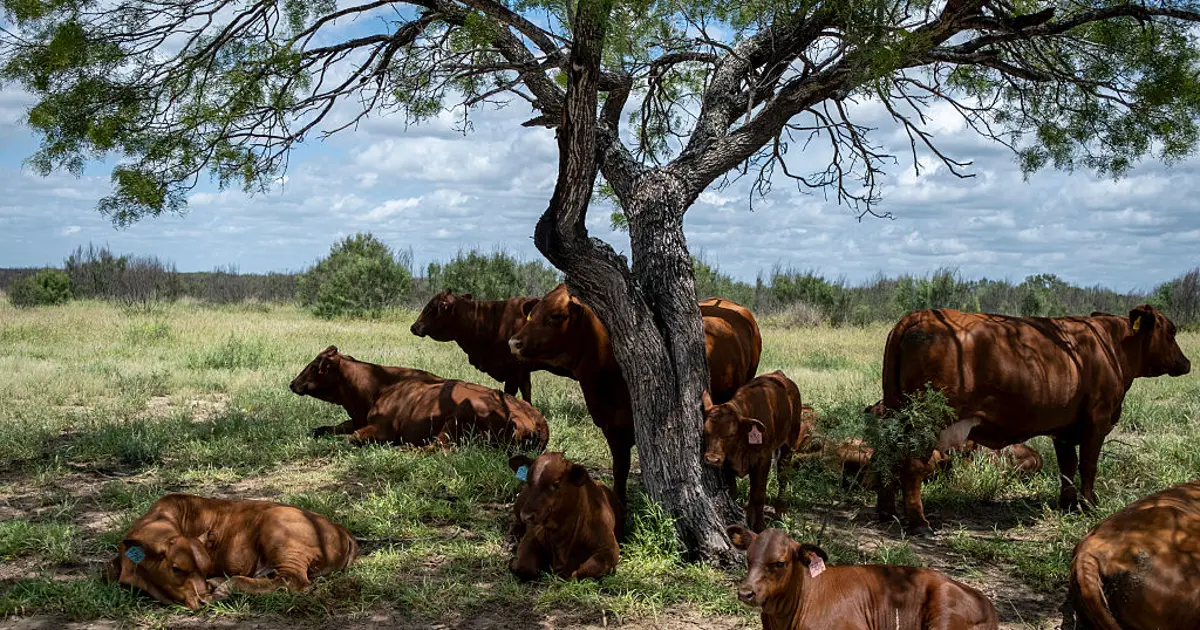
LA PRYOR, TEXAS – JUNE 11: Cattle roam Chapparosa Ranch on June 11, 2026 in La Pryor, Texas. The first case of New World Screwworm infection, since its eradication from the country in 1966, was reported in Texas last week by the United States Departm
Read more I-10 remains partially close after (another) Houston Avenue bridge strike
AUSTIN, Texas – The state of Texas has released an online course designed to train more animal health, livestock and agriculture professionals in identifying infestations of the New World screwworm.
The course was developed to help speed inspections that allow the movement of cattle and livestock through out the state.
The move comes as Texas has seen 10 cases of New World screwworm since June 3 and the Texas Animal Commission has designated five areas of the state as quarantined infestation zones.
What they’re saying:
“The State of Texas will use every tool to protect our cattle industry and wildlife while we eradicate this pest,” Gov. Greg Abbott said. “AgriLife and TAHC moved quickly to launch this training. Now more people, including private industry, will be able to inspect and certify animals for movement. Through this program, Texas will protect our ranchers, ensure the security of our food supply, and keep business strong.”
The course was developed by Texas A&M Agrilife Extension and TAHC and is delivered through the AgriLife learn platform. The course has narrated modules, videos and knowledge checks on the New World screwworm’s biology and life cycle. It also has information on how to report, inspect and treat animals, as well as movement permitting requirements.
The course provides certification for the following groups:
- veterinarians
- veterinary technicians
- Texas A&M AgriLife extension agents and disaster assessment and recovery agents
- Texas Department of Agriculture inspectors
- Texas Department of State Health Services meat safety inspectors
- Texas Racing Commission inspectors
- Animal control officers
- Livestock deputies
The course is also available for any Texan for educational purposes.
“Stopping the spread of NWS will not be possible without our inspectors knowing what to look for, that’s why today’s announcement is critical to keep our cattle industry on track,” USDA Secretary Brooke Rollins said. “We encourage everyone who is able to help us identify and report suspected cases to help eradicate this pest as fast as possible. Grateful for Governor Abbott, TAHC, TPWD, and AgriLife for being amazing partners in this fight!”
New World screwworm in Texas
The U.S. Department of Agriculture has identified 10 cases of New World screwworm in Texas since June 3. Cases have been found in Edwards, Tom Green, Zavala, Gillespie and La Salle counties. The pests have been found in cattle and goats.
Officials initially reported an additional case involving a dog in Andrews County on June 8. However, after further epidemiological investigation, authorities determined the animal lives in Lea County, New Mexico, and the case was reclassified as New Mexico’s first confirmed New World screwworm infection.
Read more Tip-over risk prompts recall of baby-changing tables
The veterinarian who submitted samples from the dog is based in Texas, officials said. Early reports indicated the dog had recently traveled to Mexico.
The Texas Parks and Wildlife Department said updates will be provided as additional cases are confirmed. The agency has established a public information page and said situation reports will be updated daily when new detections occur.
What is New World Screwworm?
The New World screwworm is considered one of the most devastating livestock and wildlife pests in history.
The insect gets its name because it’s only found in the Americas.
It lays its eggs in the open wounds of animals, and its larvae become parasites. Unlike common fly larvae, screwworm maggots burrow into and feed exclusively on the living flesh of warm-blooded animals, causing severe injury, massive economic loss, and death if left untreated.
While rare, they can also infect humans.
Officials advised livestock owners and veterinarians to remain vigilant and report suspected infestations to the appropriate authorities. The Texas Animal Health Commission is handling livestock-related cases, while the Texas Department of State Health Services oversees human infestation reports.
The screwworm was mostly eradicated in Texas and the rest of the United States in the 60s. But now, it’s moving north up from Panama and has a known presence a little over 300 miles south of the Texas-Mexico border.
To eradicate the population, federal officials are expediting the release of billions of laboratory-raised sterile flies, deploying ground release chambers to supplement the four million sterile flies already being dispersed aerially in the region each week. When wild flies mate with the sterile flies, no offspring are produced, eventually collapsing the population.
Read more Talarico ‘going to Hell’ for views on Bible, Lt. Gov. Patrick says