
A new study funded by the National Institutes of Health (NIH) has uncovered how a newer class of oral GLP-1 weight-loss drugs could reduce the desire for more than just food.
Read more Gunman in Austin 6th Street mass shooting ‘admired’ Iran leader killed in US strikes, FBI says
The findings offer new insight into how the medications affect the brain and raise the possibility they could one day help treat addiction.
GLP-1 drugs surge in popularity for treating obesity
The backstory:
GLP-1 drugs have surged in popularity in recent years for their effectiveness in treating obesity and diabetes. Earlier studies largely focused on larger peptide-based GLP-1s, such as semaglutide, which were shown to suppress hunger by targeting appetite-regulating networks in the hypothalamus and hindbrain.
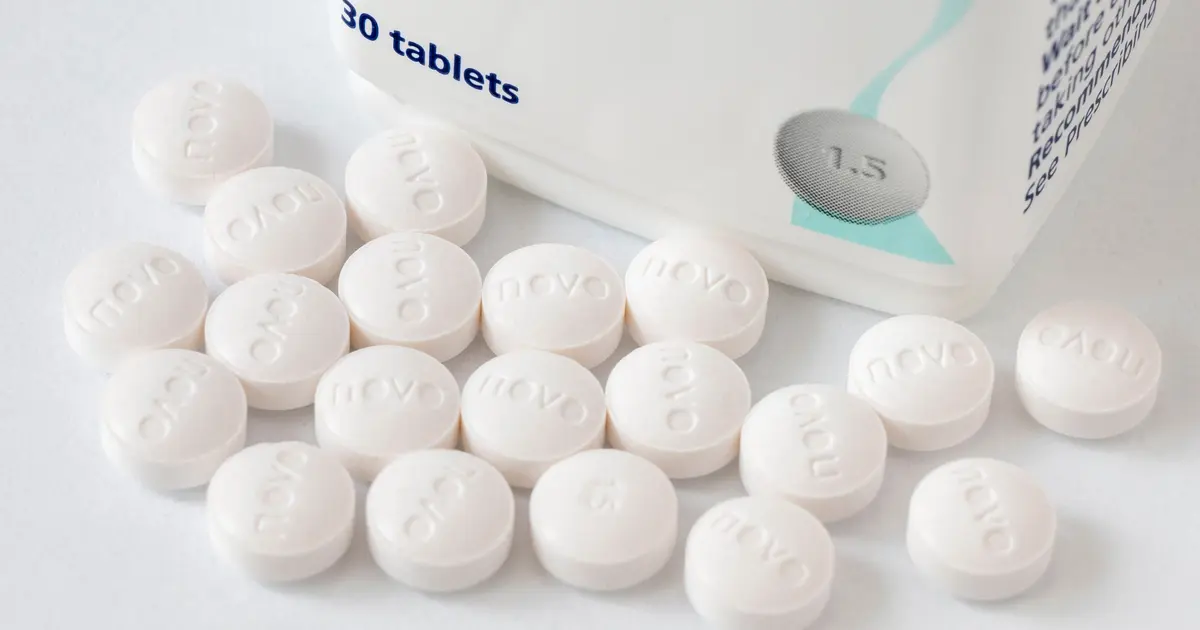
Wegovy semaglutide tablets pictured. (Credit: Michael Siluk/UCG/Universal Images Group via Getty Images)
But researchers had far less understanding of how small-molecule GLP-1 drugs worked inside the brain.
What they’re saying:
“As the accessibility of these medications continues to rise and patient uptake increases, it’s crucial that we understand the neural mechanisms underlying the effects we’re seeing,” Lorenzo Leggio, the clinical director of NIH’s National Institute on Drug Abuse, said in a statement.
Researchers investigate
Big picture view:
In the study, researchers at the University of Virginia specifically investigated small-molecule GLP-1 receptor agonists, such as the Food and Drug Administration (FDA)-approved orforglipron, which can be taken orally and are cheaper to produce than their injectable counterparts.
The authors modified the GLP-1 receptors of mice with gene-editing techniques, making them more humanlike.
Read more Dr Pepper Museum to unveil world’s largest Dr Pepper bottle at 35 anniversary ‘birthday bash’
The team then administered orforglipron or another small-molecule drug, danuglipron, and identified brain regions where they induced activity. While the GLP-1s affected familiar territory, they also triggered activity in the central amygdala, a region associated with desire that is deeper in the brain than scientists previously thought GLP-1s could directly reach.
RELATED: Trump says GLP-1 weight-loss drugs coming at $50 for Medicare patients
Further experiments showed that, once activated, the central amygdala reduced dopamine release into key hubs of the brain’s reward circuitry during hedonic feeding.
The findings identified a mechanism distinct from previously known appetite-control pathways as an avenue by which GLP-1s could treat other dysfunctions in reward processing, such as substance use disorder.
According to the researchers, their findings broadly suggest that small-molecule GLP-1s could have applications in dysregulating reward signaling, creating implications for the drug’s treatment of substance-use disorder and binge-eating.
“We’ve known that GLP-1 drugs suppress feeding behavior driven by energy demand. Now it seems oral small-molecule GLP-1s also dial back eating for pleasure by engaging a brain reward circuit,” said co-corresponding author Ali Guler, a professor of biology at the University of Virginia.
Could GLP-1s curb cravings for things other than food?
What’s next:
According to scientists, the natural next question is whether these next-generation GLP-1s can also tone down cravings for things other than food. In follow-up studies, they said they hope to dive into their effects on substance use disorder specifically.
Read more Health officials track 2 Texas residents exposed to rare hantavirus on MV Hondius cruise ship