
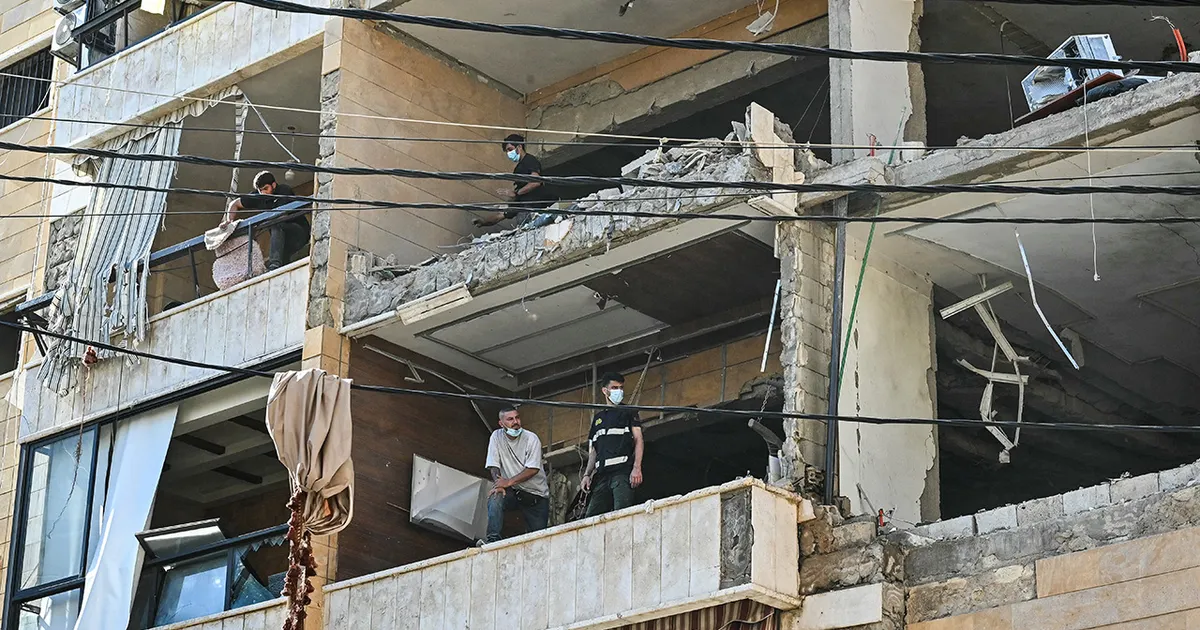
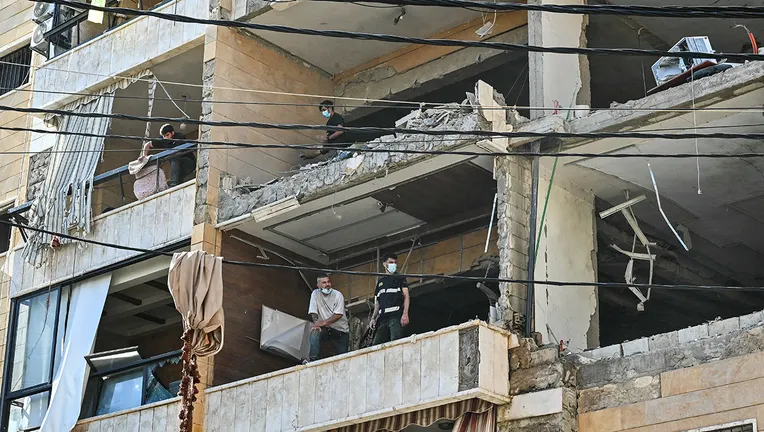
First responders inspect damage at the site of an Israeli airstrike targeting apartments in a residential building in Beirut’s southern suburbs on June 7, 2026. (Photo by FADEL itani / AFP via Getty Images)
Read more New lawsuit challenges UFC event at White House on Trump’s birthday
Sirens sounded across multiple parts of Israel late Sunday night warning residents about missiles that the nation’s military reports were launched in Iran. The attack would be the first such bombardment by Tehran since the ceasefire began in early April.
Big picture view:
The Israeli Defense Forces posted several messages saying missiles were spotted, and the nation’s Air Force was working to intercept them. A follow-up message noted another round of missiles were detected, and the Aerial Defense Array, better known as Israel’s Iron Dome, was locating and intercepting the threats. There have been no immediate reports of casualties or damage in Israel.
Associated Press journalists reported hearing loud explosions over Damascus that Syria’s state media attributed to Israeli air defenses.
What they’re saying:
Iran’s state broadcaster confirmed the missile launches. Its report included a quote from the nation’s military saying, “if Israel responds to Iranian attacks or does not stop its attacks on Lebanon, Iranian attacks will continue.”
Read more Facebook class-action privacy settlement: 2nd payments set to distribute
The White House has not released a statement about the attack at this time.
The backstory:
Tehran had warned about a new attack on Israel after the Israeli forces attacked the southern suburbs of Beirut, which would be in apparent violation of the United States’ request that Israeli leaders stand down. Israel, however, described its attack as retaliation for Iranian-backed Hezbollah firing at northern Israel.
Dig deeper:
Israel’s attack came just days after the country extended a ceasefire with Lebanon. It struck a residential building, killing two people and injuring 20 more, Lebanon’s health ministry said.
The ceasefire, which was mediated by the U.S. State Department, included newly created security zones where Hezbollah militants would not be allowed. Hezbollah was not part of the negotiations and rejected the deal.
Read more Sugar Land police search for suspect who seriously injured woman in baseball bat attack