
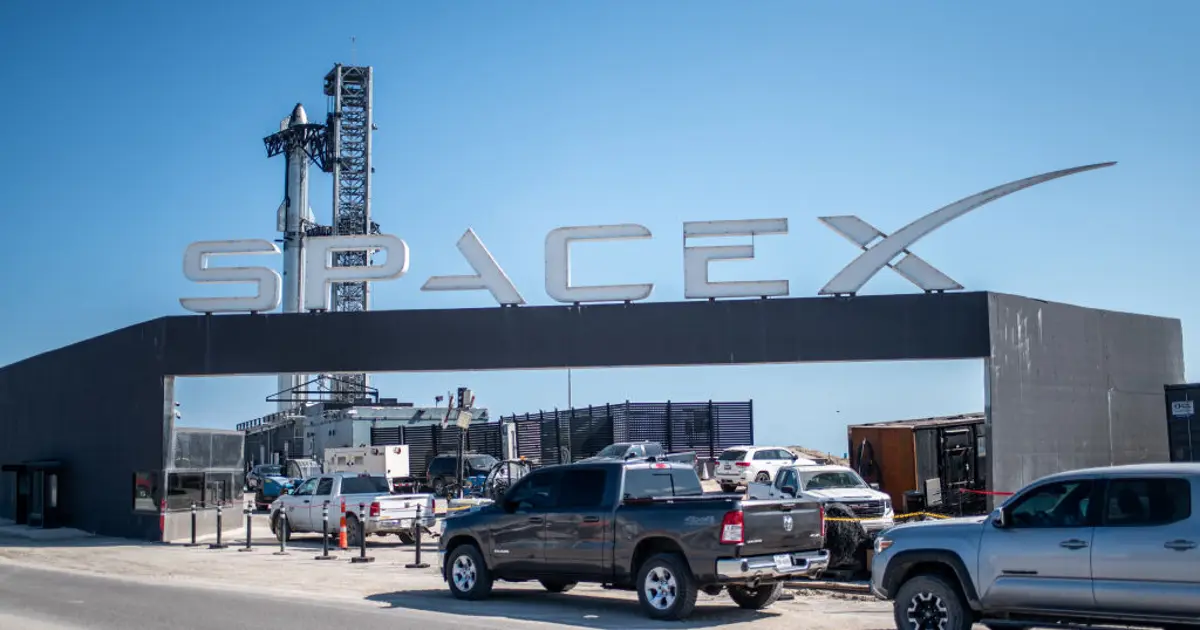
Visitors arrive at Starbase near Boca Chica, Texas, on October 12, 2024, ahead of the Starship Flight 5 test. The test will involve the return of Starship’s Super Heavy Booster to the launch site. (Photo by Sergio FLORES / AFP) (Photo by SERGIO FLORE
Read more Houston weather: Warm temperatures to continue for Wednesday
A federal court has allowed the U.S. government to proceed, for now, with a proposed land exchange involving Elon Musk’s SpaceX and a national wildlife refuge in South Texas.
700-acre South Texas refuge swap
What we know:
On Tuesday, Sept. 22, 2026, the U.S. District Court for the Southern District of Texas denied a request for a preliminary injunction from conservation groups and a Native American tribe seeking to block the exchange.
The exchange involves more than 700 acres of federally protected land in the Lower Rio Grande Valley National Wildlife Refuge near the SpaceX Starbase facility in Cameron County.
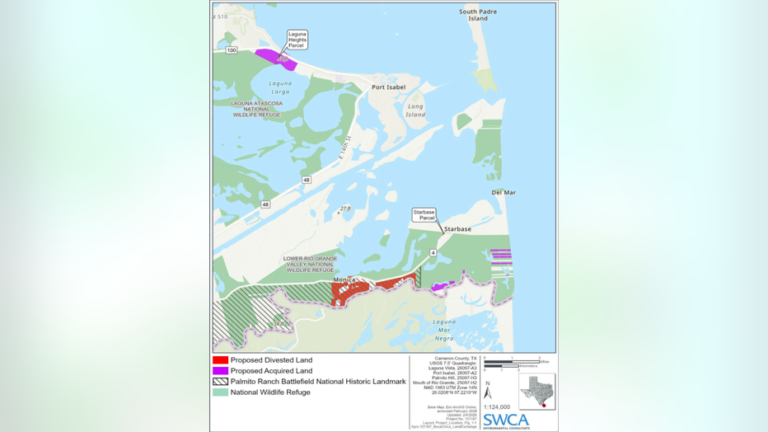
A map showing the proposed land exchange between U.S. Fish and Wildlife Service and SpaceX. Environmental groups have filed a lawsuit against FWS seeking to block the exchange.
In return, the Fish and Wildlife Service would receive about 683 acres of private land on Boca Chica Beach and near Laguna Heights.
The court found the plaintiffs had not established an injury in fact to support legal standing or shown that they would suffer irreparable harm, according to the DOJ.
The denial allows the land exchange to move forward while the broader legal dispute continues. It does not necessarily resolve the lawsuit’s remaining claims.
Environmental groups, native tribe challenge SpaceX expansion
The backstory:
The Center for Biological Diversity, Save RGV, the Carrizo/Comecrudo Tribe and the South Texas Environmental Justice Network filed the lawsuit in June.
The groups argued the exchange would permanently reduce and degrade the refuge and violate the National Wildlife Refuge System Improvement Act. They said the land being transferred to SpaceX is part of an important wildlife corridor along the Rio Grande.
The lawsuit also claimed SpaceX’s operations have harmed the surrounding area through noise, bright lights, traffic, road closures, explosions, debris, fires and industrial development.
Fish and Wildlife Service officials have defended the exchange, saying it would consolidate fragmented refuge holdings, reduce land-use conflicts and enhance long-term conservation of high-value habitat.
Related
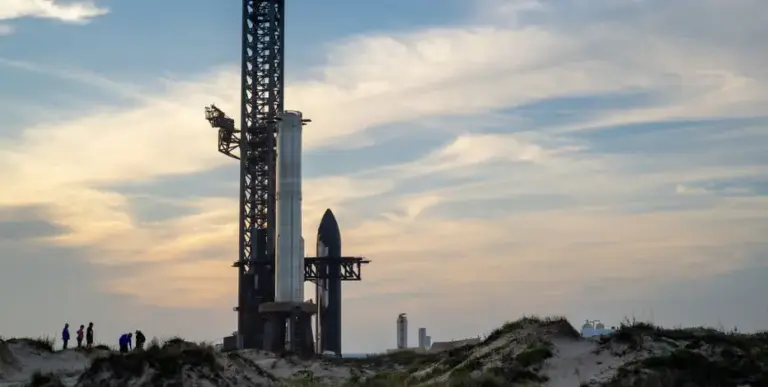

Lawsuit seeks to stop SpaceX land exchange near Texas wildlife refuge
Several conservation groups and a Native American tribe have filed a lawsuit against the U.S. Fish and Wildlife Service seeking to block the exchange of more than 700 acres of federally protected land in Cameron County.
Read more Texas prisons must be air conditioned by 2029, federal judge orders
Government and local activists clash
What they’re saying:
Adam Gustafson, principal deputy assistant attorney general for the Justice Department’s Environment and Natural Resources Division, called the exchange a benefit for conservation and national security.
“The United States will acquire several hundred acres of high-quality habitat in the Lower Rio Grande Valley National Wildlife Refuge that the Fish and Wildlife Service seeks to protect, and SpaceX will acquire land with a lower biological value that will help it achieve its mission for NASA and the Air Force,” Gustafson said in a statement.
The Center for Biological Diversity said in a social media post that the court’s decision could allow bulldozing to begin as soon as Wednesday.
View this post on InstagramA post shared by Center for Biological Diversity (@centerforbiodiv)
The group said the ruling was not the end of its legal fight and vowed to continue opposing the transfer of refuge land to SpaceX.
The Center said the exchange could turn public land into a private development site and endanger habitat for ocelots, shorebirds and northern aplomado falcons.
Local perspective:
In a video posted by the South Texas Environmental Justice Network, co-founder Bekah Hinojosa said the group would continue opposing SpaceX’s expansion and rocket launches in the area.
Hinojosa alleged that SpaceX built its Starbase facility on wetlands and near a major wildlife corridor. She also accused the company of burning wildlife habitat, discharging polluted water, sending rocket debris into nearby communities and restricting public access to Boca Chica Beach.
Dig deeper:
Hinojosa described rocket testing as disruptive to nearby residents, saying sonic booms and vibrations can be felt in communities miles from the launch site.
“What it feels like is the SpaceX rocket testing is like Elon Musk bombing us,” Hinojosa said in the video.
The South Texas Environmental Justice Network said the court’s decision was not the end of its efforts and promoted a protest event in Brownsville called the “¡Fuera SpaceX! Fest.”
Next steps in the legal battle for Boca Chica
What’s next:
The Lower Rio Grande Valley National Wildlife Refuge is home to about 1,200 plant species, 300 butterfly species and 700 vertebrate species, including at least 520 bird species, according to the Fish and Wildlife Service.
SpaceX began purchasing land in the area in 2012 and announced Boca Chica Beach as its launch site in 2014.
Read more Former Texas DPS trooper sentenced to 10 years in prison after FBI finds chats with minors