
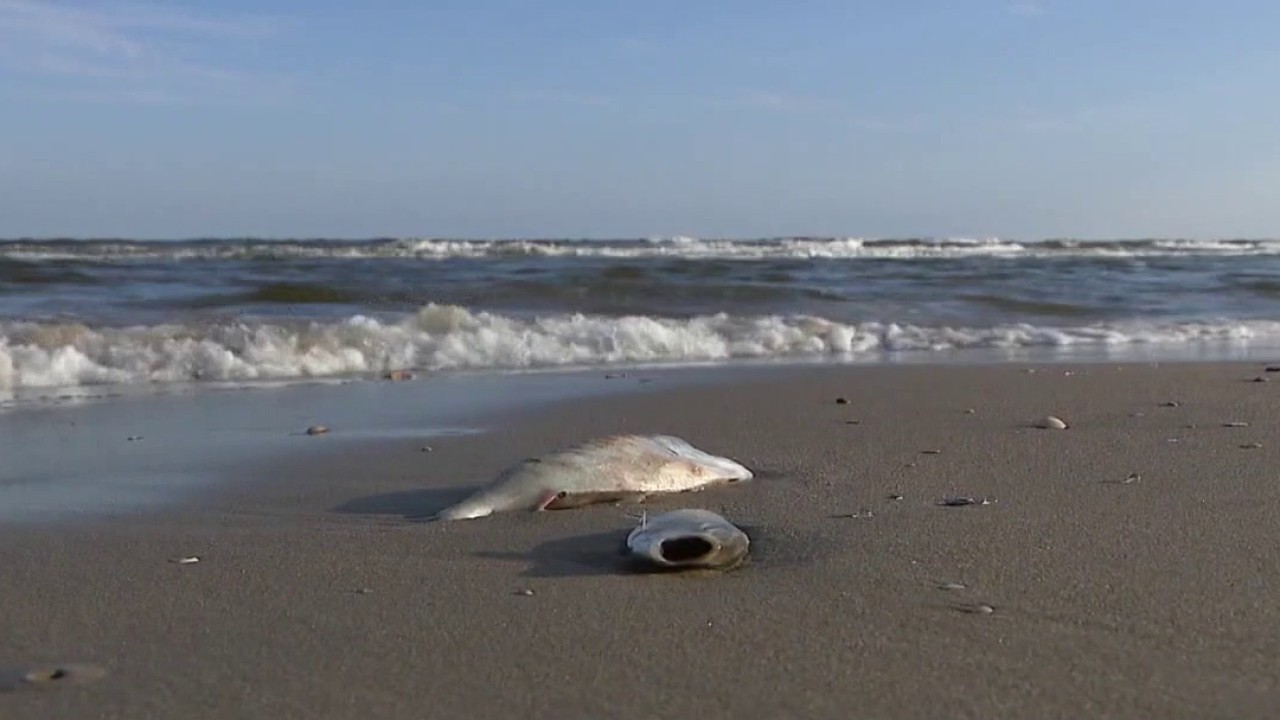
GALVESTON, Texas – Red tide has been detected along parts of the Upper Texas Coast, where fish kills and respiratory symptoms have also been reported, according to Texas Parks and Wildlife.
Read more Luigi Mangione ‘fangirls’ could have press passes revoked under new NYC bill
Red tide reported along Upper Texas Coast
What we know:
Texas Parks and Wildlife says water samples collected from Bolivar Peninsula, Crystal Beach and Galveston Island indicated moderate to high concentrations of red tide.
Fish kills and respiratory symptoms were reported on the Bolivar Peninsula, in Crystal Beach and at several locations across Galveston Island.
What we don’t know:
The information released by Texas Parks and Wildlife does not specify how long the current red tide conditions could last.
What is red tide?
“Red tide” is a term that refers to harmful algal blooms that occur when algae colonies grow out of control in the ocean or freshwater. According to the National Ocean Service, they can have harmful effects on people, birds and marine life.
It can kill fish and shellfish. Toxins can also make the air difficult to breathe. The algae can turn the water red.
Read more House speaker says $5,000 ‘Trump Dividend’ needs congressional approval
Can I still visit the beach?
What you can do:
Texas Parks and Wildlife says red tide tends to be patchy and won’t necessarily cover every stretch of beach. There might be miles of beach that are not affected by the red tide. However, they advise travelers to heed the advice of state and local health officials and make a decision they are comfortable with.
Texas Parks and Wildlife says people with questions about the human health effects of red tide should contact their local health department.
The agency also provides information about fishing, swimming and visiting the beach during a red tide event on its red tide FAQ page.
People can report a harmful algal bloom by calling (800) 792-1112 or (512) 389-4800 and selecting option 4 for Coastal and Saltwater Fisheries, followed by option 2 for red tide.